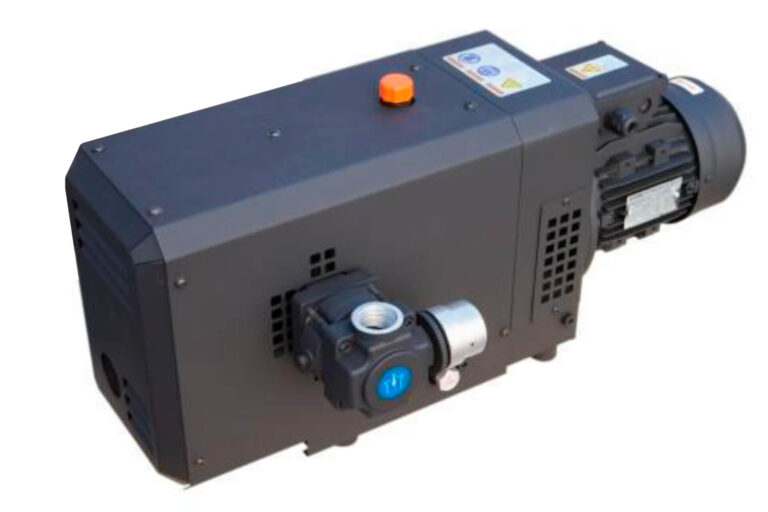
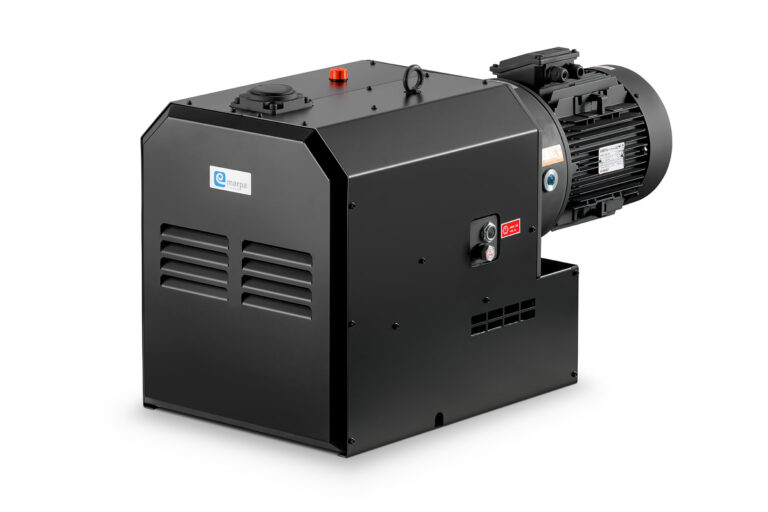
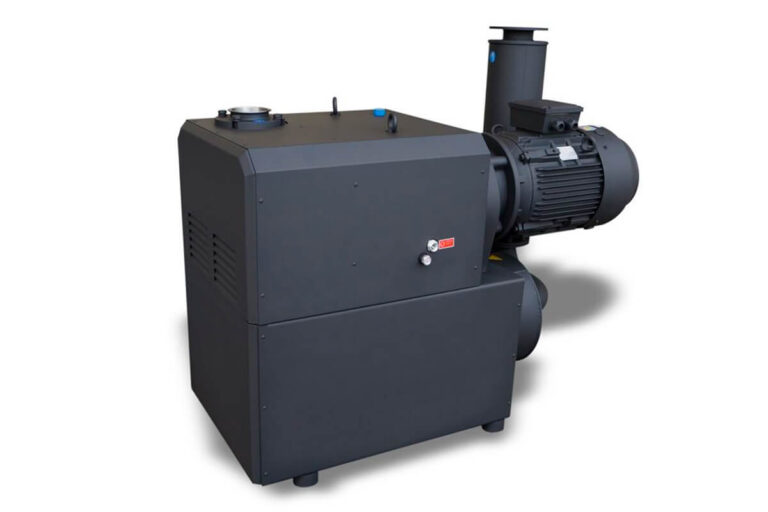
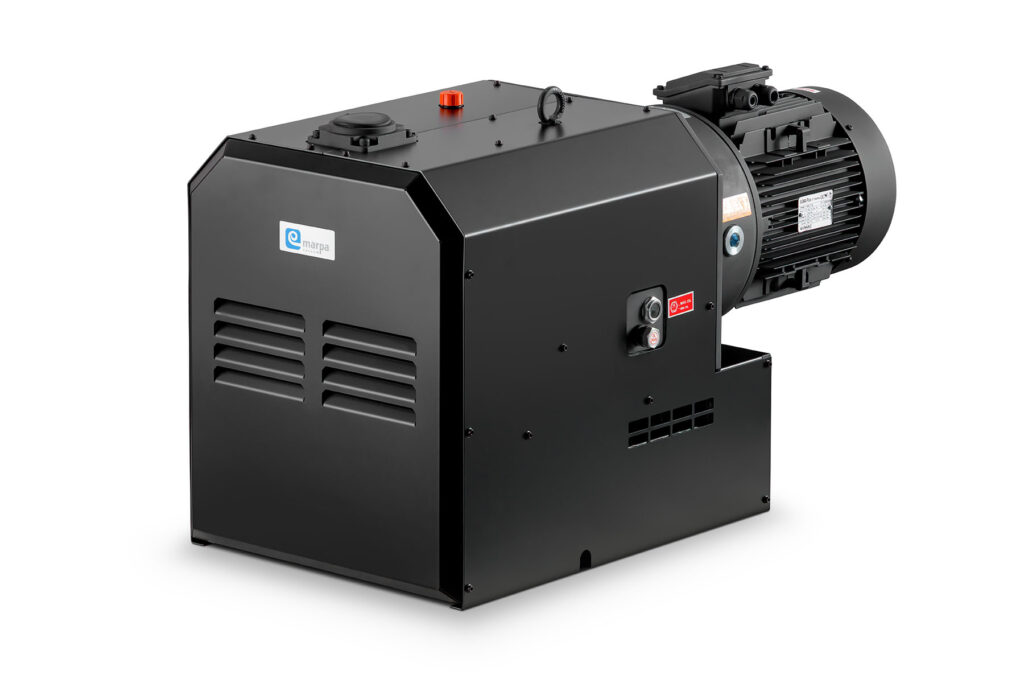
Claw vacuum pumps are a contact-free vacuum and pressure technology, completely oil-free in the pumping chamber. They stand out for their high energy efficiency, clean operation and low maintenance, making them a particularly cost-effective solution for low vacuum industrial applications.
| Applications / Technology | MVC | MVD | MV | MVS-V | MVCP | MVS-P | MVS-VP | MVR | MVF |
|---|---|---|---|---|---|---|---|---|---|
| Packaging and food industry | ● | ○ | ● | ○ | ○ | ● | |||
| Laboratory and scientific | ○ | ● | ○ | ○ | ● | ||||
| Heavy industry and metallurgy | ● | ○ | ● | ○ | ● | ||||
| CNC, woodworking and graphic arts | ● | ○ | ● | ● | ● | ● | |||
| Environment and transport | ● | ● | ● | ○ | |||||
| Oil and gas | ● | ○ | ● | ○ | ● | ||||
| Medical and hospital | ● | ● | ● | ||||||
| Semiconductors and coatings | ● | ● | ● |
MVC: Claw vacuum pumps
MVD: Two-stage lubricated rotary vane vacuum pumps
MV: Lubricated rotary vane vacuum pumps
MVS-V: Dry running rotary vane vacuum pumps
MVCP: Claw compressors
MVS-P: Dry running rotary vane compressors
MVS-VP: Combined dry running rotary vane pumps (vacuum and pressure)
MVR: Roots vacuum pumps
MVF: Diaphragm vacuum pumps
It is a positive displacement vacuum pump in which two claw-profile rotors turn synchronously in opposite directions inside the housing, without touching each other or the housing, and with no oil in the pumping chamber. Sealing is achieved by the minimal, precise clearance between the rotors, and synchronisation is ensured by a gear system. The absence of internal friction provides clean, quiet, low-maintenance operation.
The claw pump operates without internal contact and with no oil in the pumping chamber, whereas the rotary vane pump relies on contact between the vanes and the stator, lubricated by oil in the lubricated version or by self-lubricating graphite in the dry version. This difference means the claw pump offers lower wear, higher energy efficiency and lower maintenance, but the ultimate pressure it reaches (down to around 50 mbar) is more moderate than that of a lubricated rotary vane pump. If your process requires a deeper vacuum, the right choice is a two-stage lubricated rotary vane pump: see our MVD series, which reaches vacuum levels in the order of 10⁻³ mbar.
Energy saving is one of the main arguments for claw technology. Operating without internal contact or mechanical friction, no energy is dissipated as frictional heat, as happens in vane or oil-lubricated pumps. Under continuous operation, a Marpa Vacuum claw pump can reduce overall running costs by up to 50% compared with conventional vacuum generators, thanks to its high intrinsic efficiency and optimised design.
The initial investment for a claw pump is usually higher than for an equivalent rotary vane pump, but the total cost of ownership is usually significantly lower in the medium and long term. As there is no internal friction, there are no vanes to replace, no oil to change or dispose of as waste, and no dedicated oil filters. Lower energy consumption and longer maintenance intervals significantly reduce the annual operating cost. In continuous industrial processes, the claw pump recovers its initial extra cost within a few years, and from then on generates sustained savings throughout its service life.
Very little. As there is no contact between the rotors or with the housing, there are no internal wear parts: there are no vanes to replace and no oil in the pumping chamber to change or filter. Routine maintenance is limited to cleaning or replacing the inlet filter and periodically changing the gearbox oil (which synchronises the rotors) at very long intervals, in the order of tens of thousands of operating hours. It is one of the vacuum technologies with the lowest maintenance costs on the market.
Claw technology operates in the low vacuum range, with an ultimate pressure of approximately 50 mbar in the case of our MVC series. This level is sufficient for the vast majority of industrial applications requiring clean, oil-free vacuum. If your process requires deeper oil-free vacuum, the right solution is a Roots pump combined with a backing pump: see our MVR series, which can reach fine vacuum levels in the order of 10⁻⁴ mbar.
The claw pump is one of the vacuum technologies with the longest service life on the market. As there is no contact between moving parts and no internal friction, the main source of wear is eliminated, and the components do not require periodic replacement as they do in other technologies. Service intervals are very long and focus essentially on changing the gearbox oil and checking the filters. It is the ideal choice for processes that demand reliability and long-term availability without frequent downtime.
Claw pumps are ideal for industrial applications requiring clean, oil-free vacuum with high energy efficiency. Typical applications: food packaging, medical and hospital industry, pneumatic conveying, biogas, milking robots, woodworking, vacuum handling and lifting processes, and in general any process where the absence of oil contamination and continuous reliability are essential requirements.