Diaphragm vacuum pumps

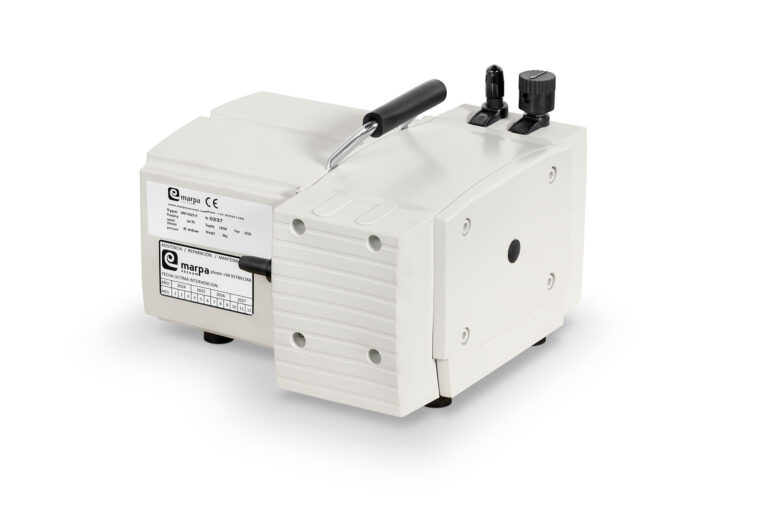
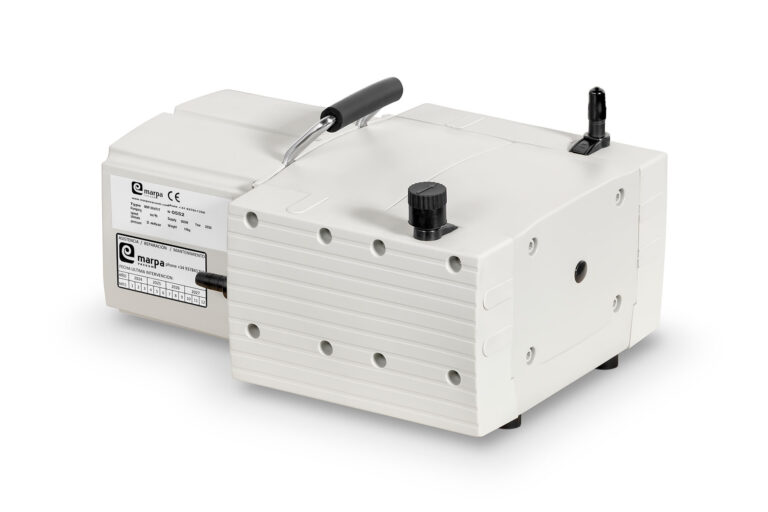
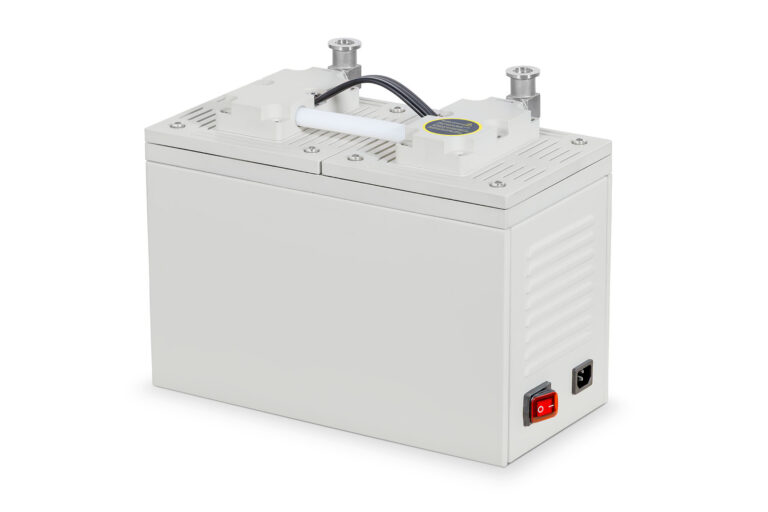
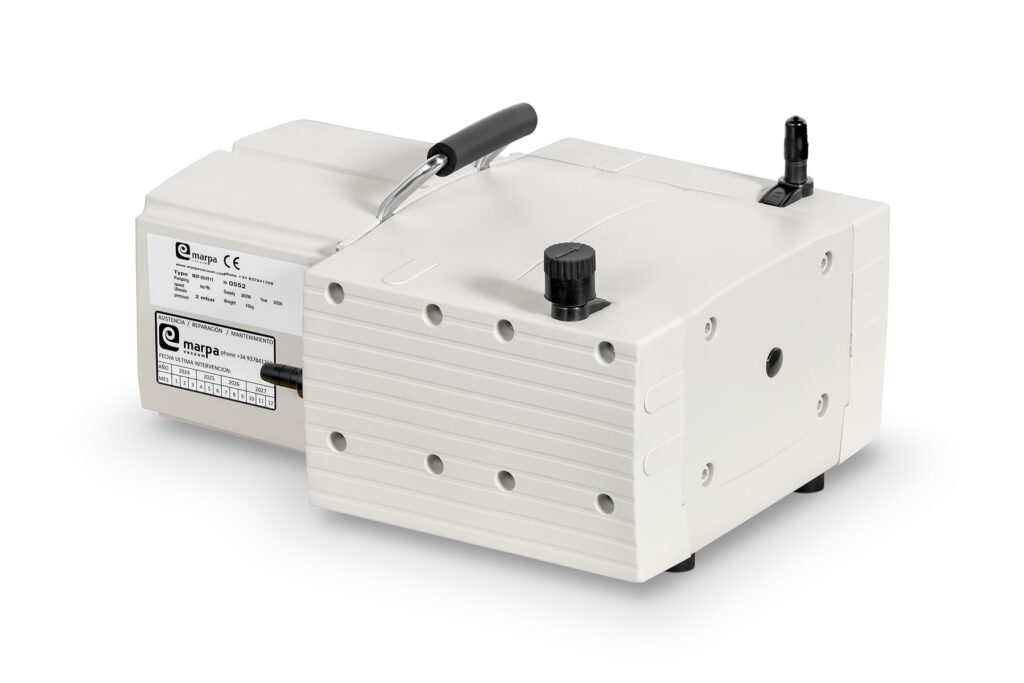
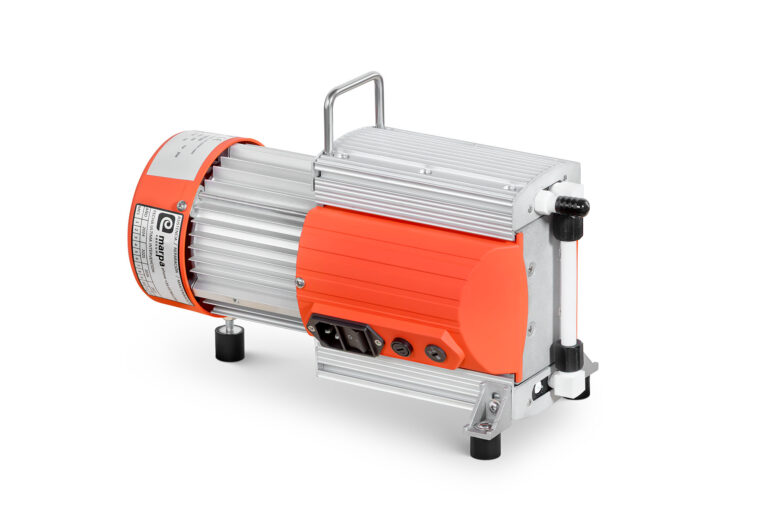
Diaphragm vacuum pumps (also known as membrane pumps) are completely oil-free positive displacement machines with no contact between parts in the pumping chamber. They stand out for delivering clean, contamination-free vacuum, simple maintenance and high chemical resistance, which makes them particularly suitable for laboratory use and for processes involving aggressive gases or vapours.
Applications of diaphragm vacuum pumps

● Optimal solution ○ Possible solution depending on the process
Applications / Technology MVF MVD MV MVS-V MVC MVCP MVS-P MVS-VP MVR
Packaging and food industry ○ ● ○ ● ○ ●
Laboratory and scientific ● ● ○ ○ ○
Heavy industry and metallurgy ○ ● ● ○ ●
CNC, woodworking and graphic arts ○ ● ● ● ● ●
Environment and transport ● ● ● ○
Oil and gas ○ ● ○ ● ●
Medical and hospital ● ● ●
Semiconductors and coatings ● ● ●

MVF: Diaphragm vacuum pumps

MVD: Two-stage lubricated rotary vane vacuum pumps

MV: Lubricated rotary vane vacuum pumps

MVS-V: Dry running rotary vane vacuum pumps

MVC: Claw vacuum pumps

MVCP: Claw compressors

MVS-P: Dry running rotary vane compressors

MVS-VP: Combined dry running rotary vane pumps (vacuum and pressure)

MVR: Roots vacuum pumps

Advantages of our diaphragm vacuum pumps

  • Completely oil-free vacuum, with no risk of process contamination
  • No contact between parts in the chamber: low wear and simple maintenance
  • High chemical resistance with diaphragms and valves in suitable materials
  • Compact and self-contained operation (no service fluids required)
  • Maintenance usually limited to diaphragms and valves as wear parts
More advantages of our MVF series

Frequently asked questions

It is a positive displacement vacuum pump in which the pumping element is a flexible membrane (the diaphragm) that flexes back and forth, driven by a connecting rod linked to an eccentric mechanism. The reciprocating movement, governed by two check valves (inlet and exhaust), draws in and expels the gas with no contact between mechanical parts inside the pumping chamber and with no need for oil. The gas only comes into contact with the diaphragm and the valves, which makes it particularly suitable for processes that require clean, contamination-free vacuum.

They are conceptually different technologies. The diaphragm pump works by the reciprocating movement of a diaphragm, with no rotating parts or contact in the chamber, whereas the rotary vane pump is based on a rotor with vanes sliding against the stator. In practical terms, the diaphragm pump is completely oil-free even in the versions that compete with lubricated rotary vane pumps, it is compact and quiet, and it offers far superior chemical resistance in configurations with PTFE, FFPM and PVDF diaphragms. Its ultimate pressure is more modest than that of a lubricated rotary vane pump. If your process requires a significantly deeper vacuum, see our MVD series of two-stage lubricated rotary vane pumps, which reaches the order of 10⁻³ mbar.

Both are dry, oil-free technologies, aimed at the same type of clean and laboratory processes, but with real differences. The scroll pump reaches a slightly lower ultimate pressure (typically a few tenths of a mbar) and offers quieter operation with less vibration. The diaphragm pump, on the other hand, stands out for its excellent chemical resistance in versions with PTFE, FFPM and PVDF diaphragms and valves, ideal for processes involving aggressive gases and solvents, and for generally lower investment and maintenance costs. At Marpa Vacuum we also offer scroll pumps: if you would like information on this technology, get in touch with us and we will advise you based on your application.

Yes, this is one of the main advantages of diaphragm technology. In the versions designed for analytical chemistry, the diaphragm and valves are made of highly resistant materials such as PTFE (Teflon), FFPM (Kalrez) and PVDF, which offer virtually total immunity to aggressive gases, acids, halogens and organic solvents. Because the gas only comes into contact with these elements (not with metal parts or oil), the risk of internal corrosion is eliminated, sample contamination is avoided and the service life of the pump is significantly extended in demanding chemical applications. It is a capability that no other dry technology offers so naturally.

It depends on the number of stages in the pump. Single-stage versions reach approximately 150 mbar, suitable for applications that do not require a deep vacuum. Two-stage versions reach down to 1-2 mbar, and multi-stage versions (with three or four chambers in series) can reach down to 0.6 mbar in the models of our MVF series. If your process requires a significantly deeper vacuum, see our MVD series of two-stage lubricated rotary vane pumps (10⁻³ mbar) or contact us to explore scroll technology, which offers an intermediate vacuum while keeping operation oil-free.

Routine maintenance is limited to the periodic replacement of the diaphragms and valves, which are the predictable wear parts of this technology. There is no oil to change, no oil filters and no hazardous waste to manage, which considerably simplifies maintenance compared with other technologies. The replacement interval depends on the operating conditions and on whether the pump handles clean gases or aggressive vapours: in standard applications it is in the order of several thousand operating hours.

Replacing the diaphragms is an operation fully planned as part of preventive maintenance; it is simple and carried out with the standard maintenance kit supplied by Marpa Vacuum, and does not require complex dismantling of the pump. As it is a predictable component, the replacement is scheduled in advance and does not affect equipment availability. If the diaphragm is ever compromised, the pump loses its ability to generate vacuum in a clear and detectable way, allowing action to be taken before the process is affected.

Yes. A common application of diaphragm pumps is as a dry backing pump for technologies that require an oil-free fore-vacuum, such as turbomolecular pumps. The diaphragm + turbomolecular combination makes it possible to reach high vacuum levels (in the order of 10⁻⁷ mbar or deeper) while keeping the entire system oil-free, which is particularly valuable in laboratory applications, analytical chemistry, mass spectrometry or gas analysis. If your project requires a vacuum system combining several technologies, get in touch with us: we have a wider catalogue of compatible technologies and can advise you on the most suitable configuration for your application.

Diaphragm pumps are noticeably quieter than rotary vane pumps, thanks to the absence of forced rotation against a stator and a simple, compact mechanical design. The sound levels of our MVF series are between 55 and 70 dB(A) (depending on the model), making them ideal for direct use at workstations, in laboratories and in environments where noise is an important factor. As the pumping cycle is reciprocating (driven by the back-and-forth movement of the diaphragm), there is a slight pulsation inherent to this technology, more noticeable than in pumps with continuous rotary operation. For models that require it, we offer configurations with dynamic mass balancing that further reduce vibration, making integration with sensitive equipment easier.

The initial investment for a diaphragm pump is usually lower than for an equivalent scroll pump and comparable to that of a rotary vane pump of equivalent power. The operating cost, however, is clearly lower than that of a lubricated pump: there is no oil consumption, no oil filters, no hazardous waste management and no associated maintenance. In laboratory applications with continuous or intermittent use, and in processes that demand clean, oil-free vacuum, the diaphragm pump is often the most cost-effective option in terms of total cost of ownership, especially when chemical resistance or zero process contamination are requirements.

Diaphragm vacuum pumps are ideal for applications that require clean, dry, oil-free vacuum. Typical applications: laboratory and analytical chemistry (rotary evaporators, vacuum filtration, degassing, drying and evaporation), processes involving aggressive gases and vapours thanks to the versions with PTFE, FFPM and PVDF diaphragms, medical and hospital sector, pharmaceutical and biotechnology applications, semiconductors and coatings as a backing pump for turbomolecular pumps, and any process where the absence of oil contamination and the ability to withstand chemicals are essential requirements.