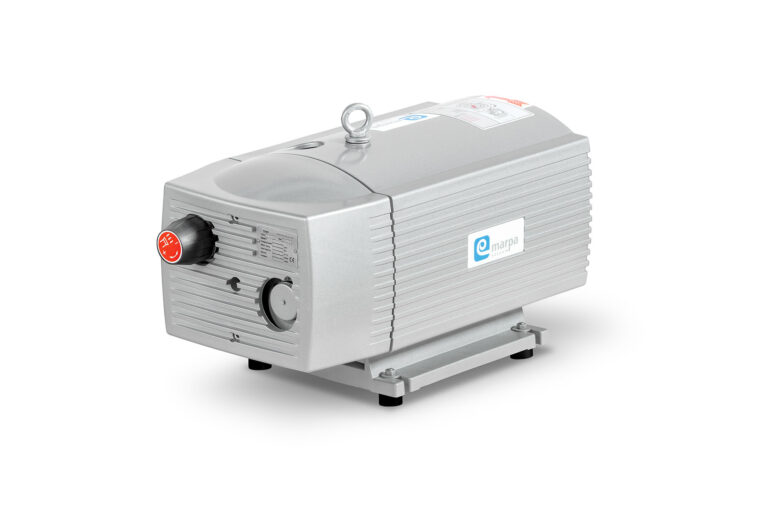
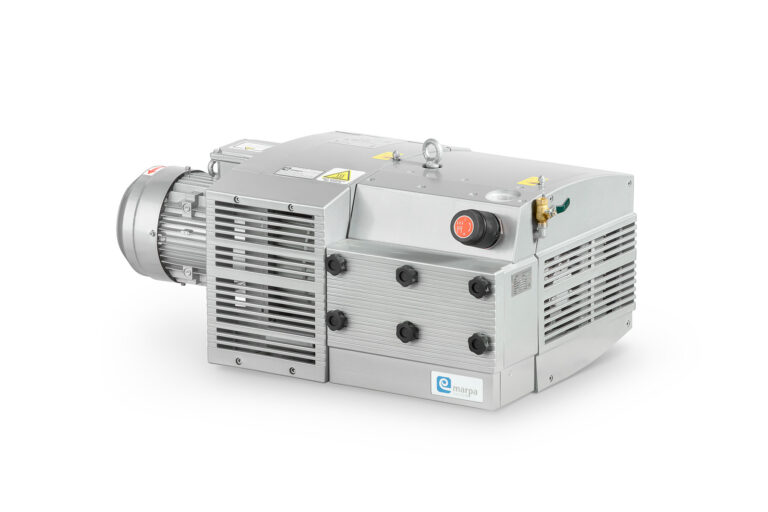
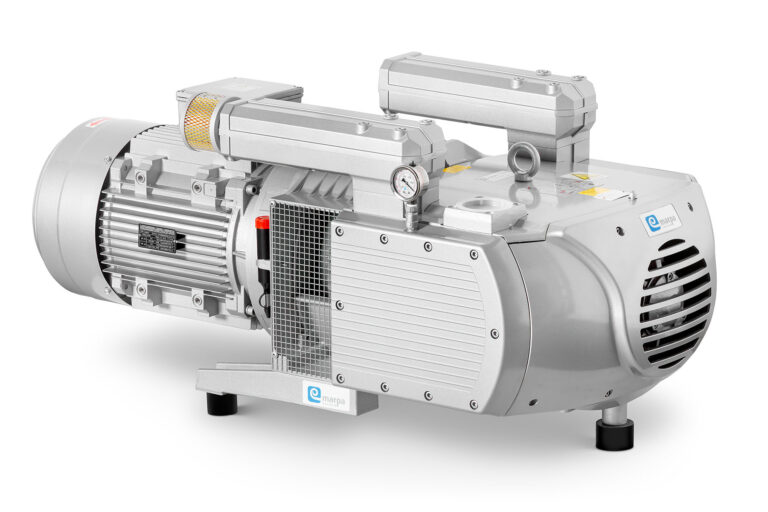
Dry-running rotary vane vacuum pumps

Dry running rotary vane pumps are a technically straightforward and robust vacuum solution that dispenses with oil in the pumping chamber altogether. This makes them particularly suitable for processes in which no oil contamination can be tolerated and where simple, clean maintenance is a priority.
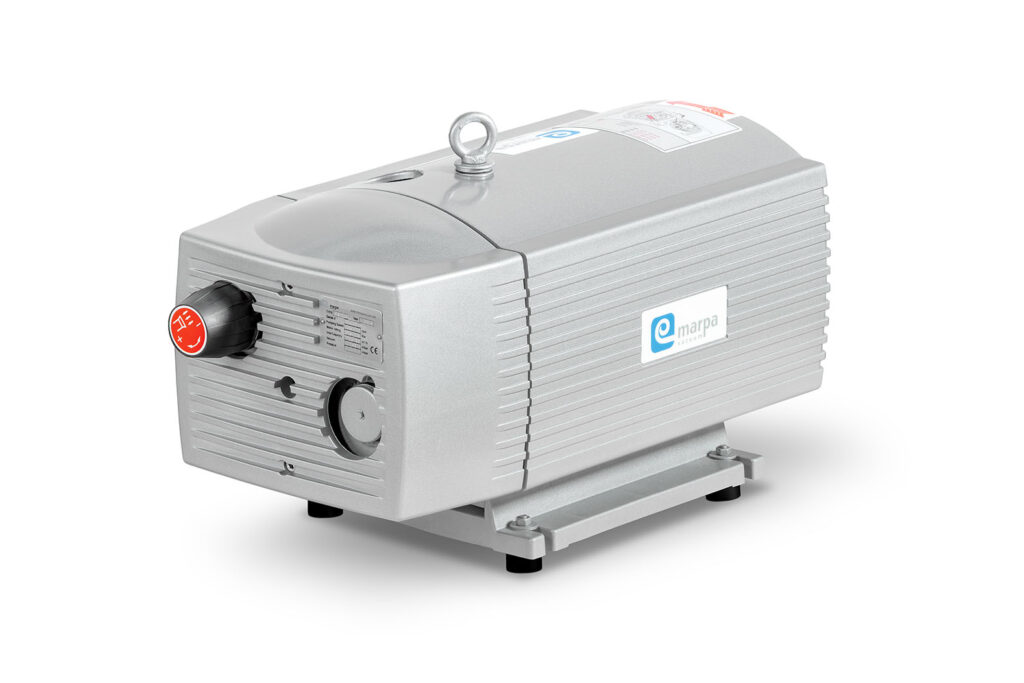
Applications of dry running rotary vane pumps

● Optimal solution ○ Possible solution depending on the process
Applications / Technology MVS-V MVD MV MVC MVCP MVS-P MVS-VP MVR MVF
Packaging and food industry ○ ○ ● ● ○ ●
Laboratory and scientific ○ ● ○ ○ ●
Heavy industry and metallurgy ○ ● ● ○ ●
CNC, woodworking and graphic arts ● ○ ● ● ● ●
Environment and transport ● ● ● ○
Oil and gas ○ ○ ● ● ●
Medical and hospital ● ● ●
Semiconductors and coatings ● ● ●

MVS-V: Dry running rotary vane vacuum pumps

MVD: Two-stage lubricated rotary vane vacuum pumps

MV: Lubricated rotary vane vacuum pumps

MVC: Claw vacuum pumps

MVCP: Claw compressors

MVS-P: Dry running rotary vane compressors

MVS-VP: Combined dry running rotary vane pumps (vacuum and pressure)

MVR: Roots vacuum pumps

MVF: Diaphragm vacuum pumps

Advantages of our dry running rotary vane pumps

  • Oil-free operation, with no risk of process contamination
  • Robust, technically straightforward construction
  • Clean, minimal maintenance
  • Suitable for vacuum and, depending on the model, also for pressure or combined operation
More advantages of our MVS-V series

Frequently asked questions

It is a positive displacement vacuum pump in which a rotor fitted with graphite vanes turns eccentrically inside a stator, with no oil in the pumping chamber. The vanes themselves, made of self-lubricating graphite, provide both sealing and lubrication through continuous contact with the inner wall of the stator, with no need for an external supply of lubricant.

The main advantage is completely oil-free operation: the discharged air is clean, with no risk of process contamination and no mist in the working environment. Maintenance is also simpler, with no oil or oil waste to manage, and the risk of cross-contamination in sensitive processes is eliminated. The trade-off is that the achievable vacuum level is more moderate (down to approximately 120 mbar abs.), compared with the 0.1 mbar reached by single-stage lubricated versions. That is why the dry pump is the ideal choice for processes that prioritise a clean vacuum, whereas the lubricated pump is preferable when a deeper vacuum is required.

Lubrication and sealing are provided by the vanes themselves, which are made of self-lubricating graphite. As the rotor turns, centrifugal force pushes the vanes against the stator wall: the graphite maintains continuous low-friction contact, forming an effective seal and preventing excessive wear of the parts, with no need for any external supply. The vane material itself therefore performs the dual sealing and lubricating function that the oil film provides in lubricated pumps.

Maintenance is simple and clean, and consists mainly of the periodic replacement of the graphite vanes, which are the predictable wear item, and cleaning or replacing the inlet filter. There is no oil, oil filter or separator (demister) to manage, as there is with lubricated pumps, and no hazardous waste from lubricant. The actual vane replacement interval depends on the operating conditions and the model; our technical team can advise you on your specific application.

Yes, natural wear of the vanes generates a small amount of graphite dust which is carried along with the discharged gas. In the vast majority of industrial applications this amount is negligible and poses no problem. In processes that are particularly sensitive to particle contamination (certain high-purity pharmaceutical applications, advanced semiconductors or precision optics), it may be necessary to install a filter downstream of the exhaust. In any case, this dust does not contaminate the pumped medium, as it is directed towards the discharge together with the gas.

Whenever oil contamination is unacceptable or when the aim is to simplify maintenance. Typical applications: food packaging, pharmaceuticals, medical industry, plastics processing and converting, vacuum lifting and handling, clean pneumatic conveying, woodworking, graphic arts and industrial processes where the discharged air is shared with the working environment. It is also the preferable option when the user prioritises simple, waste-free maintenance, even if the required vacuum level is not deep.

Dry running rotary vane pumps reach a vacuum of down to approximately 120 mbar abs., i.e. they are within the low vacuum range. This level is sufficient for the vast majority of industrial applications requiring clean, oil-free vacuum. If your process needs deeper oil-free vacuum (for example, in the order of tens of mbar or better), the right solution is another dry technology (screw pumps, claw pumps or a booster + dry backing pump set). For oil-free fine vacuum, consult our technical team about the optimum configuration.

Yes. Dry running rotary vane technology is the same machine whether it is used to generate vacuum or pressure: the only thing that changes is how it is connected to the process. At Marpa Vacuum we offer dry running rotary vane compressors (MVS-P series), which deliver completely oil-free compressed air, and combined pumps (MVS-VP series), capable of generating vacuum and pressure simultaneously with a single unit. They are the ideal solution for processes requiring clean pressurised air, or that combine suction and discharge in the same system.

Rotary vane technology is one of the most proven on the market in terms of service life. The pump body is extremely durable, while the graphite vanes are the predictable wear item and require periodic replacement depending on the operating conditions. With a regular maintenance plan (essentially changing the vanes and the inlet filter), a Marpa Vacuum dry pump provides long, highly reliable service in continuous industrial applications.

The initial investment for a dry pump is usually somewhat higher than for an equivalent lubricated pump in the same flow range. However, the total cost of ownership is often competitive or even lower, as it eliminates the consumption of oil and filters, the disposal of used oil as waste, and the associated maintenance time. In applications where possible oil contamination has a real cost (product loss, risk of quality rejection, health and safety penalties), the dry pump is clearly more cost-effective in the medium term.